Puglia doesn't try to impress you.
It feeds you.
It's a long strip of land held between two seas, but its heart is inland. Wheat fields. Olive groves. Dry stone walls. A landscape that teaches you what matters, because there isn't room for much else.
Pugliese cooking is often described as cucina povera. Poor cooking. But the word “poor” doesn't fit when you taste it. It's not lacking. It's disciplined. It's food that knows how to live with the seasons. Food that respects the earth enough to waste nothing.
This is where orecchiette makes sense.
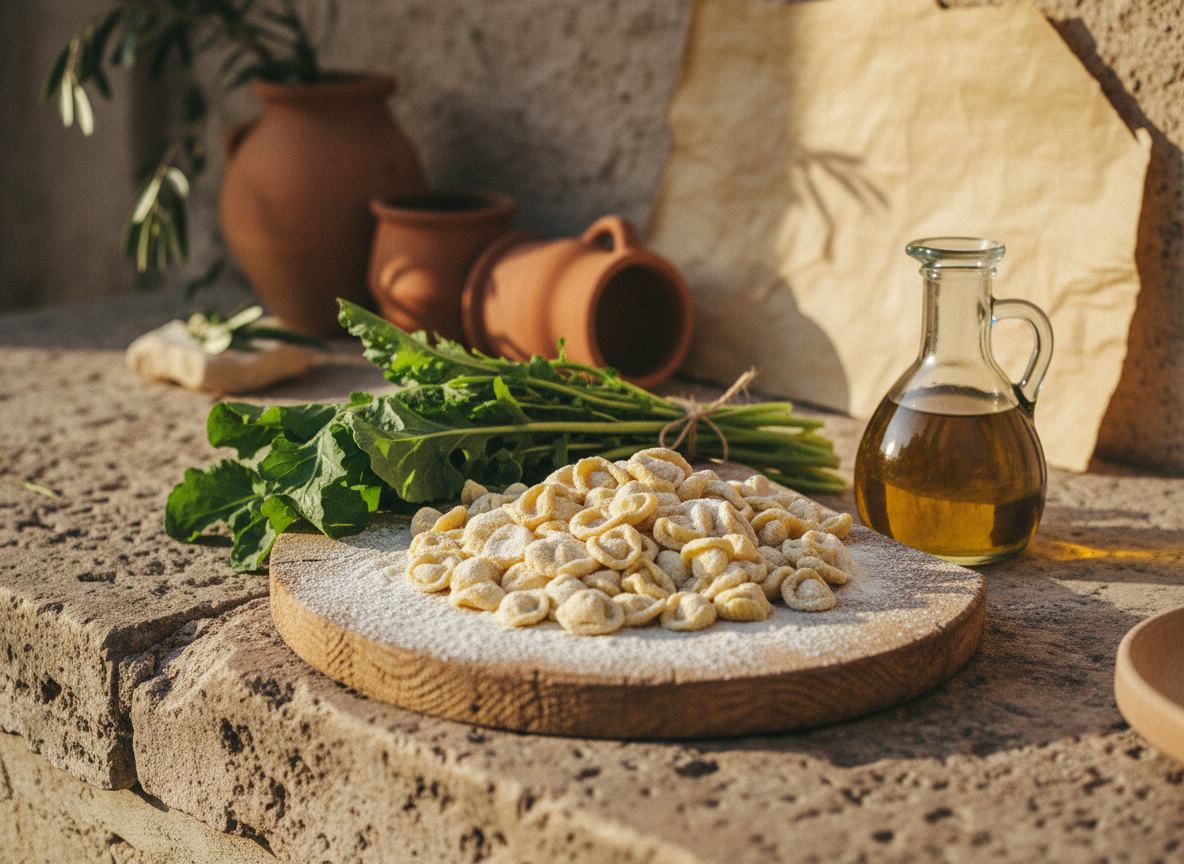
Little “ears” of pasta, shaped by hand, built to catch what's available. A spoon of tomato. A slick of oil. A handful of greens. A few crumbs of toasted bread when there's no cheese. It's not a compromise. It's a method.
In Puglia, bitterness is welcome.
Cime di rapa, chicory, wild greens. The flavours are grown-up, honest. They don't need sugar to soften them. They need good oil. They need salt. They need heat. They need the kind of patience that comes from cooking the same things for generations.
And then there's the olive oil.
Not as a finish. As a foundation. The thing that turns pantry ingredients into dinner. The thing that carries garlic, chilli, lemon. The thing that makes a simple pot of pasta feel like a meal with a centre.
Puglia is often called the pantry of Italy. Not because it's full of luxuries, but because it's full of staples. Durum wheat. Tomatoes. Legumes. Oil. The ingredients that keep a household going.
There's a quiet confidence in that.
A belief that if you have the basics, you can feed people well. You can make something warm. You can make something that holds.
In Puglia, the earth sets the menu, and somehow it's always enough.